
Attitudes Towards and Patterns of Medication Use Among Persons With ‘SMI’
From Mifrasim Institute for Psychotherapy Research and Teaching: A recent conference in Israel explored how attitudes and patterns of medication use are related to different aspects of the identity and domains of recovery.

Much of U.S. Healthcare Is Broken: How to Fix It (Chapter 2, Part 4)
Les Ruthven addresses a ghostwritten study claiming effectiveness of antidepressants for children and adolescents.

Arrested Development: Britney Spears’ Memoir Is a Survivor’s Tale of Generational Trauma, Psychiatric Abuse,...
Miranda Spencer discusses Britney Spears' new memoir and the harms of conservatorship.

Giving Caregivers a Platform: Sherita, Mother of Tony
This is the story of Sherita and her son Tony, and her efforts to help him following years of psychiatric drugs and hospitalizations.

Financial Conflicts of Interest Persist in DSM-5-TR Panel Members
From the BMJ: Lisa Cosgrove and colleagues report that 60% of the panel and task-force members of the DSM-5-TR received payments from industry. Collectively,...

What Helped—and What Didn’t Help—My Recovery
In order to recover, it was necessary to give up the psychiatric treatment system, and the idea that I need something from that system, that I belong there.
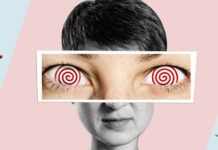
It’s Health’s Illusions I Recall, I Really Don’t Know Health at All
There is a core concept shaping the ‘market’ in health, the concept of an assay, that few doctors or patients understand.

Why We Need More Soteria Houses
From Compassionate Mental Health: "Strong feelings are often at the bottom of psychosis – we need to be able to power down the emotions with interpersonal and physical environments where emotional relaxation is possible," says psychiatrist Luc Ciompi.
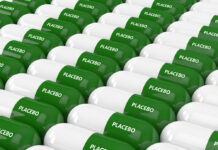
Much of U.S. Healthcare Is Broken: How to Fix It (Chapter 2, Part 3)
Les Ruthven addresses the lack of evidence for antidepressants being better than placebo, as well as a note about ECT.
Improving Outcomes for Psychosis: Psychiatric Survivor and Critical Psychiatry Perspectives
"If I and the people around me could have been helped to see that there was some significance in what I was proclaiming, that I could actually do something meaningful in the world, something with impact, something with power to affect change -- was that so crazy? Or did it come true?" ~ Dina Tyler

Therapy by App: A Clinical Psychologist Tries BetterHelp
Revealing concerns about BetterHelp’s ability to provide quality, secure treatment—and the unresolved tensions in the science of psychotherapy that services like BetterHelp exploit.
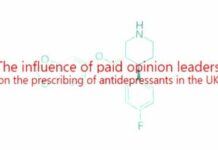
The Influence of Paid Opinion Leaders on Antidepressant Prescribing in the UK
From Hole Ousia: Paid opinion leaders who generally control the narrative in relation to psychiatric drug prescribing continue to be very much a thing of the present.
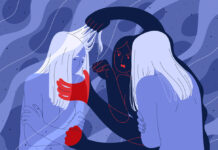
A Psychotic Experience can Help to Process Difficult Memories
The patient is talking, if sometimes more or less metaphorically, about real experiences. Hallucinations and delusions are not meaningless.

Deep Flaws in FDA Oversight of Medical Devices, and Patient Harm, Exposed in Lawsuits
From KFF Health News: A yearlong investigation by KFF Health News revealed that a series of FDA-cleared products have been suspected of contributing to thousands of injuries and patient deaths.

The Power of Distress in an Unhealthy World
From Psychology Today/Joanna Cheek MD: Diagnoses take on a life of their own, when we try to treat "the depression" instead of addressing the problem it’s signaling.

Winding Back the Clock: What If the STAR*D Investigators Had Told the Truth?
The STAR*D Study has been cited as real-world evidence of the efficacy of antidepressants. In truth, it told of a failed paradigm of care.

De-privatizing Our Relationships
I’m glad we’re chipping away at the cracks in psychiatry and psychology and de-privatizing our lives.

Much of U.S. Healthcare Is Broken: How to Fix It (Chapter 2, Part 2)
Les Ruthven addresses the scientific literature on antidepressant efficacy and FDA approval.

An Inability to Visualize the Future (Let Alone a Positive One) Is a Hallmark...
From Psychology Today/Annie Wright, LMFT: It sounds unbelievable to someone with a trauma history that there are people who can think forward decades into the future, visualize a happy outcome for themselves and then work backward, taking steps that secure that future.
Mad in America’s 10 Most Popular Articles in 2023
A roundup of Mad in America's most read blogs and personal stories of 2023 as chosen by our readers.

Dr. Gordon Warme: The Curious Case of an Unconventional Psychiatrist
Dr. Warme bucked convention, examining the cultural role that shamans, witch doctors, and placebo cures played in medicine.

As Foundation for ‘Excited Delirium’ Diagnosis Cracks, Fallout Spreads
From KFF Health News: The campaign against excited delirium seeks to transform the way police deal with people undergoing mental health crises. “This is really about saving lives,” said attorney Joanna Naples-Mitchell.

Conservatorship: The Racket That Ruined My Father’s Last Years
I have watched as my father’s pursuit of happiness was swept away by the court system in his senior years.

FDA Warning and Matthew Perry’s Death Darken Ketamine’s Glow
From The Washington Post: Federal health authorities are intensifying their scrutiny of the drug ketamine for "treating mental health disorders," as the mind-altering compound grows in popularity despite the lack of regulatory approval for such use.

Trying to Fly Above—An Example of Sequencity
I consider synchronicity and sequencity connections to be gifts. The meaning involved is often much deeper and more personal than other people will recognize.