
Experts say it is difficult to know how often restrictive or coercive practices are used in psychiatric care because different people define these practices in different ways, and the data that is collected is often incomplete or reported inconsistently. A new international study published in the British Journal of Psychiatry Open found major differences between what mental health professionals consider a restrictive practice and what is officially reported as one at their facilities. Additionally, a third of participants reported that a scenario involving forced drugging would likely not be reported at their facility. Led by Zelalem Belayneh of Monash University in Australia, this study suggests that official statistics may significantly underestimate how often restrictive and coercive practices are actually used in mental healthcare. The authors write:
“The current research provides compelling empirical evidence of systematic underreporting of restrictive practices, demonstrated by substantial discrepancies in how [healthcare professionals] HCPs classify and report restrictive practices … An overriding pattern emerges in clinicians’ responses, suggesting that the scenarios presented were more commonly recognised as restrictive practices, yet fewer HCPs believed that these scenarios should be reported. Even fewer thought that these practices would actually be recognised and classified as restrictive practices within their facility.”
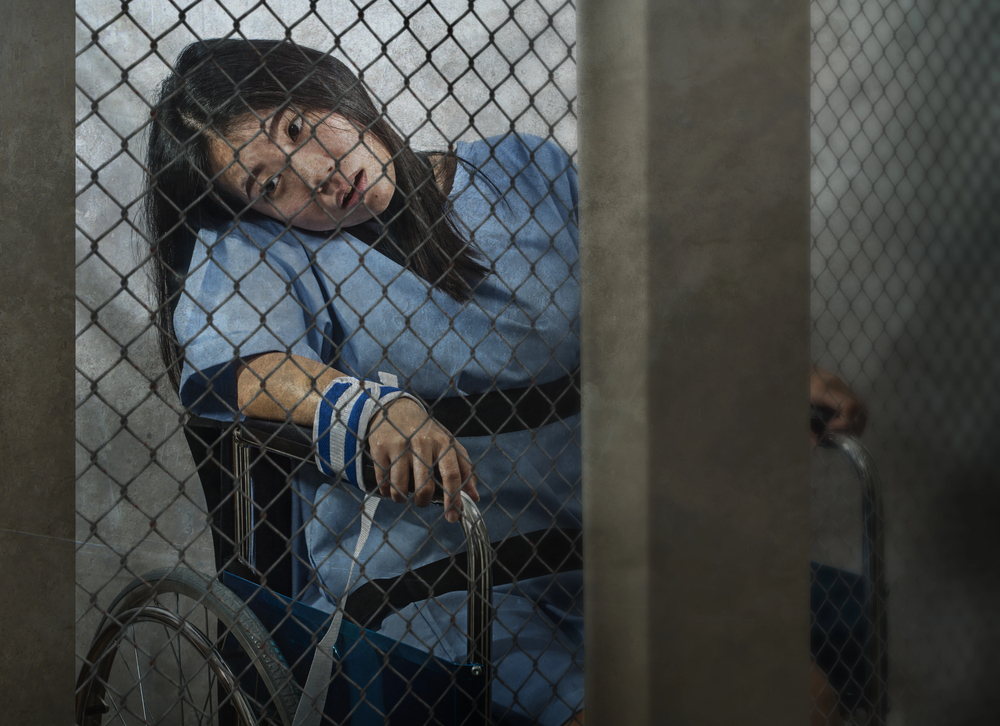
Harms Linked to Coercive Practices in Psychiatry
Past research has found that coercive practices in psychiatry are linked to a number of harms including death, cardiac arrest, dangerous blood clots, pulmonary embolism, and physical injuries and likely undermine recovery. A 2019 paper reported that seclusion and restraint were associated with the development of PTSD symptoms, fear, psychological distress, and reduced quality of life. This paper also presented evidence that the negative effects may outweigh any “therapeutic benefits” of these practices. One study found that seclusion was linked to attempted suicide, self-harm, fractures, and severe agitation.
Patients have reported that restrictive psychiatric practices result in re-traumatization, nightmares, intrusive memories, emotional distress after the event, feelings of powerlessness, loss of autonomy, humiliation, dehumanization, feelings of violation, loss of dignity, and damaged relationship with mental healthcare staff. A study of patients’ experiences of physical restraint in emergency departments found that these practices can have a long-term negative impact on psychological well-being. Patients have described forced drugging as “assault” and “torture,” and a violation of human rights.
Despite the harms and controversy surrounding the use of coercion and restrictive measures in psychiatry, recent research has found that these practices are increasing. While proponents of these measures argue that they are born of clinical necessity, research has found that coercive practices are associated with systematic failings such as staffing shortages and inhospitable ward environments. Recent research has also found that minorities are more likely to face coercive and restrictive psychiatric measures, further undermining the assertion that these practices are about clinical need.
Study Details
The aims of this research were to examine what HCPs considered to be restrictive practices in psychiatric settings, whether they believed these practices should be formally reported, and which practices they believe are actually classified as restrictive and reported in their facilities. The authors also wanted to identify inconsistencies that may contribute to the underreporting of restrictive and coercive practices in psychaitric settings.
They recruited HCPs working in adult mental health inpatient settings from across the world through professional networks and social media to take part in an online survey. Each participant was presented with 44 potentially restrictive practice scenarios and asked to answer four questions about each: Is this a restrictive practice? Should it be reported as a restrictive practice? Would their facility classify it as a restrictive practice? Would their facility actually document or report it as a restrictive practice? In total, the authors used data from 491 HCPs in 41 countries.
Overall, there was a significant gap between believing a practice was restrictive and reporting it through official channels. There was also a statistically significant difference between participants’ own classification and their facility’s classification of a practice as restrictive, and their own belief that it should be reported and their belief that their facility would actually document it in all 44 scenarios. There were significant differences between what the participants believed to be restrictive and what they thought should be reported in 10 of 44 scenarios.
The authors also observed a consistent decline in agreement across successive survey questions. More participants believed that a practice was restrictive than believed it should be reported through official channels. Similarly, more participants believed a practice should be reported than believed their facility would classify it as restrictive. Finally, more participants believed their facility would classify a practice as restrictive than believed the facility would actually document it.
This means that participants often disagreed with facilities’ definitions of “restrictive” and sometimes did not believe practices they themselves identified as restrictive should be reported through official channels. These discrepancies suggest a systematic institutional filtering process that results in substantial underreporting of restrictive practices in psychiatric facilities.
The pattern of declining agreement across successive survey questions is best illustrated by participants responses to a scenario in which the door to a psychiatric ward is locked to prevent a patient from escaping while the doors within the ward remained open. Fifty-point-two percent of participants (220) “definitely agreed” that this was a restrictive practice while only 38% (166) “definitely agreed” it should be formally reported. Thirty-two percent (140) said their facility would classify this scenario as restrictive compared to 24.5% (125) that said their facility would document it.
Beyond disagreement about what constitutes a restrictive practice, this declining agreement across the survey questions indicates that even among participants that agreed that a scenario was restrictive, substantially fewer expected it to be formally documented.
This research also shows evidence that frequently occurring restrictive practices would often not be documented as such. When presented with a scenario in which a patient is forcefully drugged, 72% of participant said this happened at least once per month at their facility. However, 21% said this practice would “probably” not be documented, and 12% said it would “definitely” not be documented at their facility. This means even some commonly occurring restrictive practices likely do not make it into official statistics.
According to the authors, there is likely a significant gap between the recording of restrictive practices and what patients actually experience. Concrete definitions of “restrictive,” consistent and reliable reporting frameworks, more and better research into restrictive practices, and better training could improve reporting and help close the gap between official records and patients’ experiences. They conclude:
“Discrepancies between healthcare professionals’ classification of restrictive practices and their reporting intentions, as well as between their perspectives and actual institutional practices, highlight potential errors in current reporting systems. These findings underscore the need for standardised definitions, enhanced reporting frameworks and structured training programmes and monitoring mechanisms to improve consistency in the management of restrictive practices across mental health settings.”
This study had six main limitations. The design of the study allows the findings to demonstrate discrepancies between what participants believed was restrictive compared to what would actually be documented, but the authors could not use this data to measure the rate of underreporting. As participants were contacted to take part in this research through professional networks and social media there may have been some selection bias, with HCPs that were especially interested in restrictive practices being more likely to participate.
Participants were not evenly distributed across countries or professions, complicating direct comparisons. The study’s focus on adult mental health inpatient settings means the findings may not be generalizable to other populations such as forensic settings, older populations, disability services, etc. Definitions and reporting standards for restrictive practices varies significantly between countries and likely affected participants’ responses. The data was self-reported, meaning is was susceptible to misreporting, misremembering, and reporting what is most socially acceptable rather than what is accurate.
****
Belayneh, Z., Lee, D.-C. A., Petrakis, M., Aluh, D., Onu, J. U., Newton-Howes, G., Masters, K., Kohn, Y., Sin, J., Goulet, M.-H., Husum, T. L., Jelastopulu, E., Bakola, M., Leung, S. F., De Cuyper, K., Muir-Cochrane, E., Canteloupe, Y., Diviney, E., Barr, L., … Haines, T. P. (2026). Discrepancies in classification and reporting of restrictive practices (restraints, seclusion and other coercive measures) in mental health services: Multi-scenario analysis of an international survey. BJPsych Open, 12(3). (Link)













They will not listen to the “crazy” people no matter how hard people try.
Report comment
Don’t you think the image at the very top is slightly too offensive? I would remove it, if I were you.
Report comment