
A new empirical review published in the Journal of Law, Medicine & Ethics reports that pharmaceutical industry corruption is a structural, industry-wide problem. Author Marc A. Rodwin from Suffolk University in Boston argues that existing laws, policies, and self-regulation cannot stem pharmaceutical industry corruption because the profits from illegal and ethically questionable behavior far exceed regulatory fines and civil penalties.
According to the current work, this industry uses illegal bribes, legal payments, and “gifts” to corrupt every level of drug regulation and prescribing. This includes blatantly illegal acts such as bribing public officials, doctors, and political parties, as well as institutional corruption such as industry funding clinical trials of its own products and the creation of conflicts of interest by making payments directly to doctors, researchers, authors and other stakeholders in order to increase drug sales. Rodwin writes:
“Bribery is routine and widespread in the international pharmaceutical industry… Transparency policies that require disclosure of payments to physicians … are grossly inadequate tools. Such policies assume the information reported will be truthful and accurate while parties employing bribes or engaging in other corruption typically falsify data they reveal … The key problem is that financial ties create conflicts of interest that compromise choices and disclosure of information does not cure the conflict of interest.”
Ultimately, Rodwin argues that true reform would require structural separation between industry funds and medical decision-makers.

Harms Linked to Industry Corruption
Past research has linked bribes and illicit payments from pharmaceutical companies to distorted healthcare priorities, misuse of resources, promotion of poor drug choices, increased costs, unnecessary treatment, and the erosion of trust in healthcare institutions. A 2021 study found that legal payments to physicians were linked to changes in prescribing patterns which led to increased costs and less appropriate prescriptions favoring the payer’s products. Similarly, research from 2010 reported that pharmaceutical industry information given to physicians was linked to reduced prescribing quality, with a 2017 study finding the same about “gifts” from pharmaceutical companies to clinicians. Doctors that accept industry payments also get more patient complaints. One study found that while two-thirds of patients see physicians that accept payments and/or “gifts” from the pharmaceutical industry, only 5% knew about their doctor’s industry ties.
Studies have found that industry funded research can make drugs look safer than they actually are while suppression of unfavorable clinical trial results exposes patients and service users to undue risk. One example of this was the infamous study 329, a clinical trial sponsored by SmithKline Beecham (now GlaxoSmithKline) for their antidepressant Paxil. The clinical trial reported positive findings for Paxil, but after a lawsuit resulted in the release of internal documents researchers discovered that the efficacy of this drug was significantly overstated while harms such as suicidal behaviors, worsening depression, hostility, mania, and hospitalization were covered-up.
Review Details
A recent study of international bribery cases using data from the Organisation for Economic Co-operation and Development (OECD) found that every major pharmaceutical company was implicated in bribery schemes. These schemes were systematic and occurred at every level from sales representatives to executives. Rodwin notes that these companies often created bogus receipts, contracts, and financial statements to hide their crimes, yet are expected to honestly self-report payments made to clinicians through legislation like the Physician Payment Sunshine Act.
In addition to relying on the honesty of companies with a documented history of falsifying records, physician payment databases lack verified information regarding what services were provided in exchange for payments. While this kind of transparency can be useful in attracting press coverage, scholarly analysis, and giving reformers data to use when pressing for policy changes, Rodwin believes it can also normalize industry payments to doctors and increase public acceptability of these practices.
In the 1970’s, investigations into the Watergate scandal uncovered a vast landscape of corporate bribery, illegal campaign contributions, and other fraud. This prompted the Securities and Exchange Commission (SEC) to offer deferred prosecution and reduced sanctions for companies that reported such questionable practices. John Braitwaite used data from these reports in his 1984 book Corporate Crime in the Pharmaceutical Industry where he writes that this data:
“Revealed that [the pharmaceutical industry had] one of the worst records … almost every type of person who can affect the interests of the industry has been the subject of bribes.… [including] doctors, hospital administrators, cabinet ministers, health inspectors, customs officers, tax assessors, drug registration officials, factory inspectors, pricing officials and political parties.”
The Public Citizen Health Research Group examined civil and criminal settlement agreements between pharmaceutical companies and US federal and state prosecutors. They found that between 1991 – 2021, 234 pharmaceutical companies paid more than $62 billion to settle cases against them in the US. Every major pharmaceutical company was implicated. These settlements involved violations of the Anti Kickback Act, the False Claims Act, antitrust laws, and the Food, Drug, and Cosmetic Act’s provisions against unsafe manufacturing, hiding research data, and dishonest marketing. The following 10 settlements were the largest paid by pharmaceutical companies:
-
Purdue: $8.344 billion
-
Johnson & Johnson: $5 billion
-
GlaxoSmith Kline: $3.4 billion
-
GlaxoSmith Kline: $3 billion
-
Pfizer: $2.3 billion
-
Johnson & Johnson: $2.006 billion
-
Mallinckrodt: $1.6 billion
-
Abbott: $1.5 billion
-
Eli Lilly: $1.415 billion
-
Reckitt Benckisser (Indivior): $1.397 billion
Starting in 2000, companies that paid a settlement for alleged illegal conduct had to implement a corporate integrity agreement meant to change corporate policies and establish an external monitor to avoid the same kinds of illegal activities in the future. However, these agreements seem dubiously effective in preventing future illegal activities. Between 1991 – 2021, federal US prosecutors have entered into 248 settlements with 41 pharmaceutical companies operating under a corporate integrity agreement. Pfizer has the highest number of repeat offenses (15), followed by Novartis (12), GlaxoSmithKline (9), Bristol Myers Squibb (9), Teva (7), and Merck (7).
Rodwin notes that the details of how corporate integrity policies actually operate are obscured due to the government not releasing that data despite Freedom of Information Act requests. Companies are also generally free to choose their own independent review organization, which is most commonly the same firm that audits their securities filings. This means the “independent” review organization is typically employed by the company it is meant to oversee, creating a significant conflict of interest. Rodwin writes:
“Some analysts argue that the amount companies earn from corruption is much more than the fines paid so that continued illegal corruption is profitable even after deducting the fines they pay. They conclude that fines on individuals or corporations alone are insufficient to deter misconduct. Several analysts argue that the most effective sanction would be to incarcerate corporate officials who engage in fraud or who are the responsible corporate officer — an option that can be used for misdemeanors under the Food, Drug, and Cosmetic Act, even though prosecutors rarely invoke this option.”
In addition to the illegal practices employed by the pharmaceutical industry, these companies also rely on legal institutional corruption and conflicts of interest as important aspects of their normal operations. They sponsor clinical trials of their own products, host continuing medical education seminars that encourage doctors to ignore harms and increase prescriptions of their drugs, recruit prominent academics and clinical experts to push industry products on physicians and shape treatment norms, fund professional societies, and make payments to clinical guideline panels as well as authors and editors of medical journals.
While illegal kickback schemes can result in prosecution, the same financial dependencies are normalized under legal names such as “research payments” and “consulting fees.” Rodwin views the illegal bribery and kickback schemes (which he labels classic corruption) and institutional corruption as two sides of the same coin. Addressing pharmaceutical industry corruption effectively requires moving past mere oversight of illegal acts and dismantling the legal financial dependencies that compromise medical decision-making.
As financial incentives embedded within the pharmaceutical business model make corruption resilient against transparency measures and relatively small civil penalties, Rodwin proposes several structural reforms. These include stronger sanctions and prison sentences for top executives overseeing systemic fraud, forfeiting all global revenues tied to illegal marketing campaigns, barring commercial firms from making payments to physicians, clinical practice guideline panels, funding continuing medical education, and shifting drug trials away from industry sponsorship to independent, publicly managed entities.
Scope of Corruption
As detailed in the current review, pharmaceutical industry corruption is vast in scope. From illegal international bribery schemes and kickback payments that implicate every major pharmaceutical company, to legal payments made to regulators, researchers and prescribers, industry money corrupts every level of drug regulation, research, and prescription. Past research has found most authors of psychopharmacology textbooks have received industry payments. Industry funded continuing medical education downplays the dangers of industry products while encouraging physicians to increase prescriptions. Payments to FDA advisers and speakers corrupts the regulatory process, while payments to DSM committee members influences clinical practice guidelines. Research has also found that industry payments directly to clinicians influences prescribing decisions.
Studies have revealed rampant, often undisclosed conflicts of interest in top psychiatry journals, raising questions about sponsorship bias in clinical trials resulting in misleading results that are favorable to industry products. Industry payments to editors and medical commentary authors have been linked to favorable coverage of industry products in academic journals, undermining their credibility. One expert detailed the tactic of “ghost management” in which industry representatives craft and publish research in the names of complicit academics, allowing industry propaganda to masquerade as legitimate research. These practices are so common that one researcher has called evidence based medicine an “illusion.”
****
Rodwin, M. A. (2026). Probing the prevalence of pharmaceutical corruption. Journal of Law, Medicine & Ethics, 54(2), 130–142. (Link)








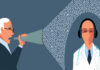




The Joys of Neoliberal Capitalism.
Report comment
Well one of a number of metaphorical atom bombs exploding in every system and locations with done fallout centered in certain locations. It’s not just the harm done described in this article it is the hard from the breaking down of support frameworks and or the whittling down to sketal bones for helpful agencies and or groups.
There just is not much around though the term co- survivor is now being used . Well yes of course! I have seen as a professional , as a parent, as a friend , as a relative more and more human beings being put into untenable crisis situations . I have talked to mothers who worry constantly about adult children . I have had to cope with suicides of several people . I have had to cope with substance abuse issues of friends and family.
I throw up my hands at this point because we need a union of concerned humans to work at every bomb sure and bomb factory . We need a clock that tracks the too young could have been salvaged lives of human beings. And the corruption is beyond Pharma but everywhere and it has turned at times communities into ruins of collapse . We have the knowledge on trauma, we have all of what we need to regenerate human communities. It remains to be seen if we have the moral will and. Outage. Many people have died fighting this fight. We also need a wall of names. Abd intimately it is the children who pay the hardest price . I hope we can somehow save the planted,, and all human beings with an eye to future generations.
Report comment
I have never understood how publicly “disclosing” whom you are bribing in any way mitigates the effects of bribery!
Report comment